
Adult ADHD Blog
Making Friends with your brain
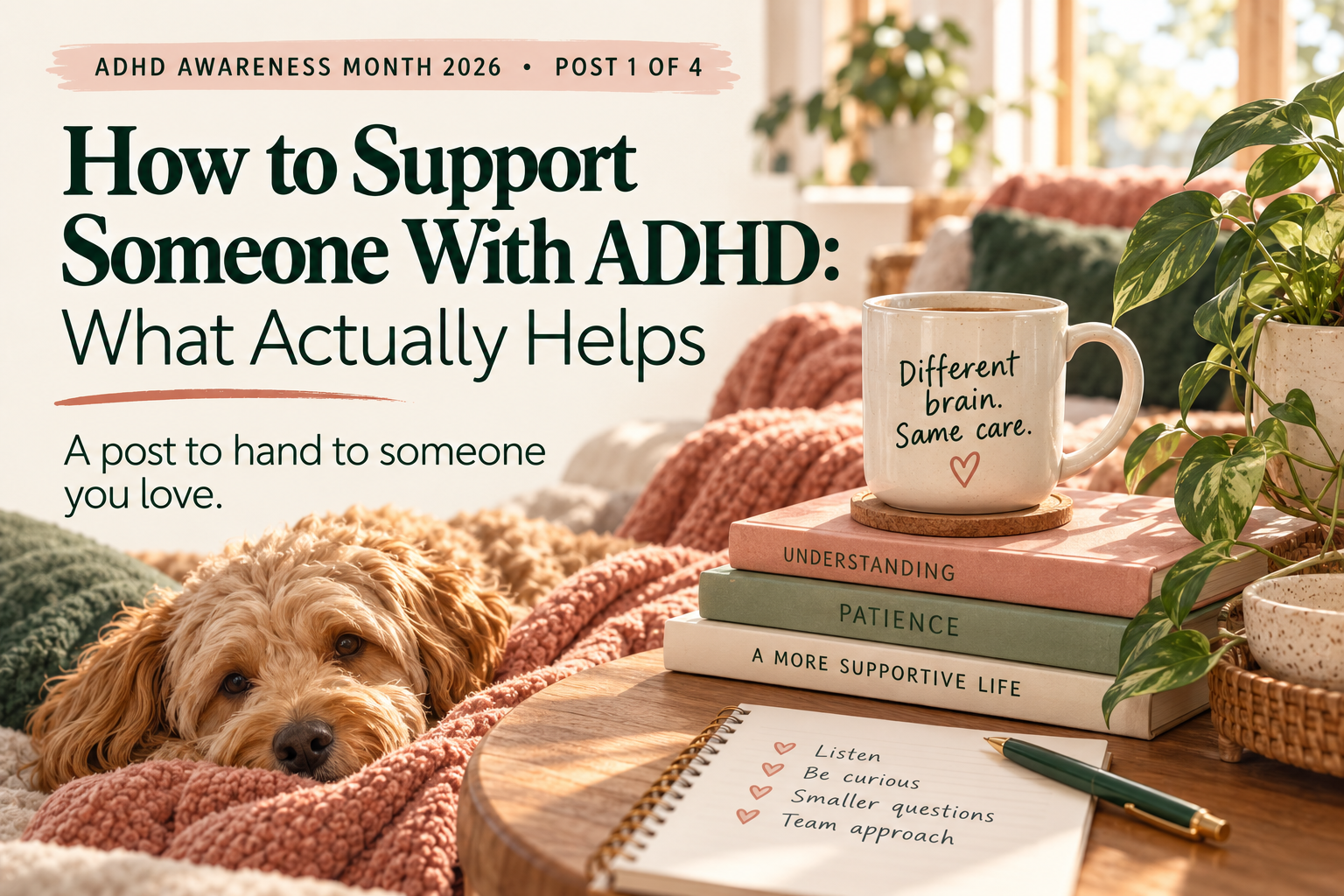
How to Support Someone With ADHD: What Actually Helps
"What do you need from me?" If someone who loves you has asked that and your mind went blank, this is the post to hand them. What your person has already heard, why "try harder" misses, and a few small things that help.

Are You Motivating Yourself or Punishing Yourself?
You've been using the harsh voice to get yourself moving for years, and you're scared that without it nothing would get done. The research has an answer to that, and it's a relief.

Mornings Without the Scramble: The Parent Edition
The school morning is won or lost the night before. By 7am you aren't running a routine, you're executing a plan that either exists or doesn't. A practical guide for ADHD and AuDHD parents running executive function for two.
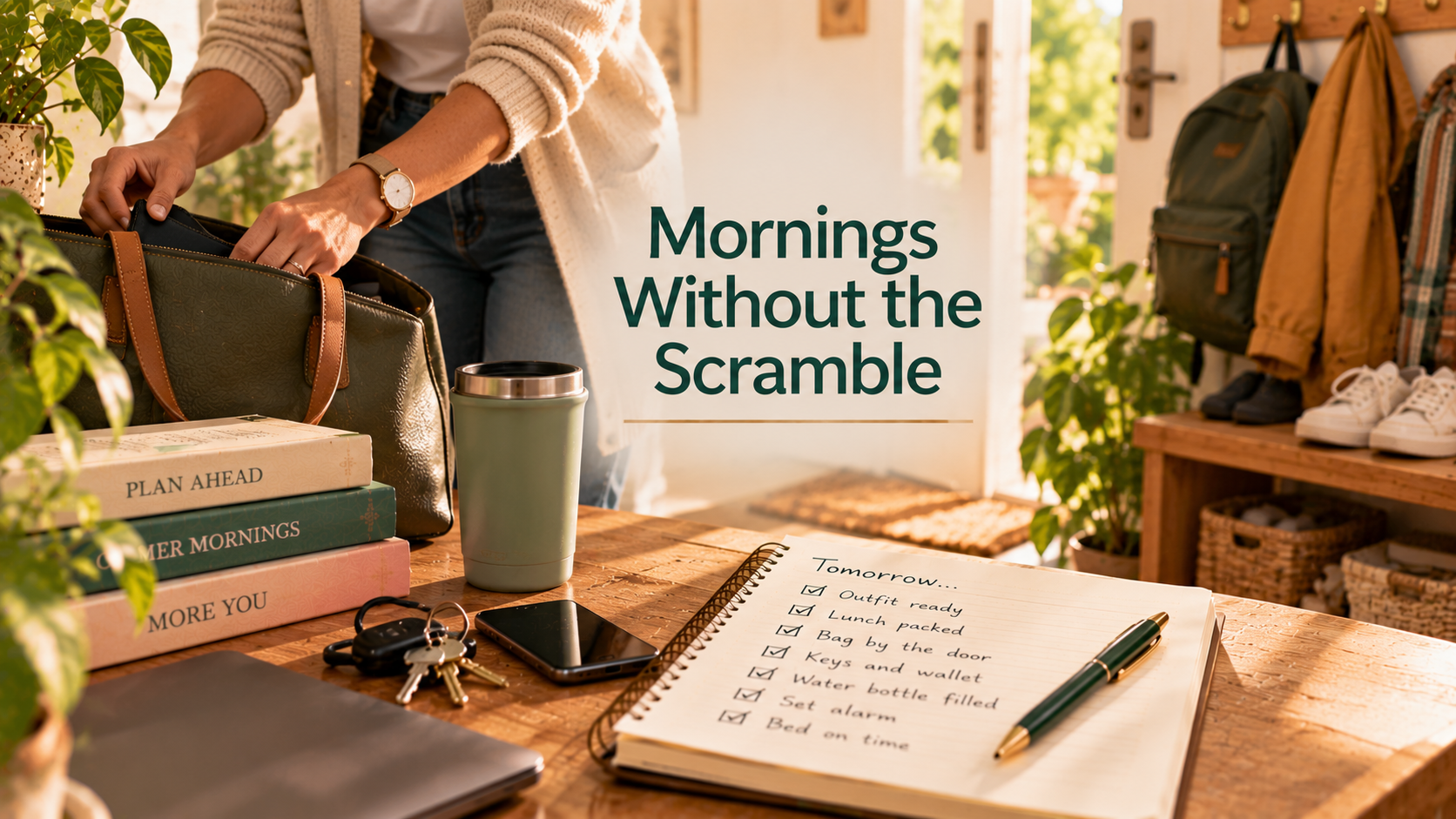
Mornings Without the Scramble
Your morning routine doesn't start in the morning. By the time the alarm goes off, the outcome is largely already decided. Here is what is actually happening in the first half hour after waking, and how to build the whole morning the night before.
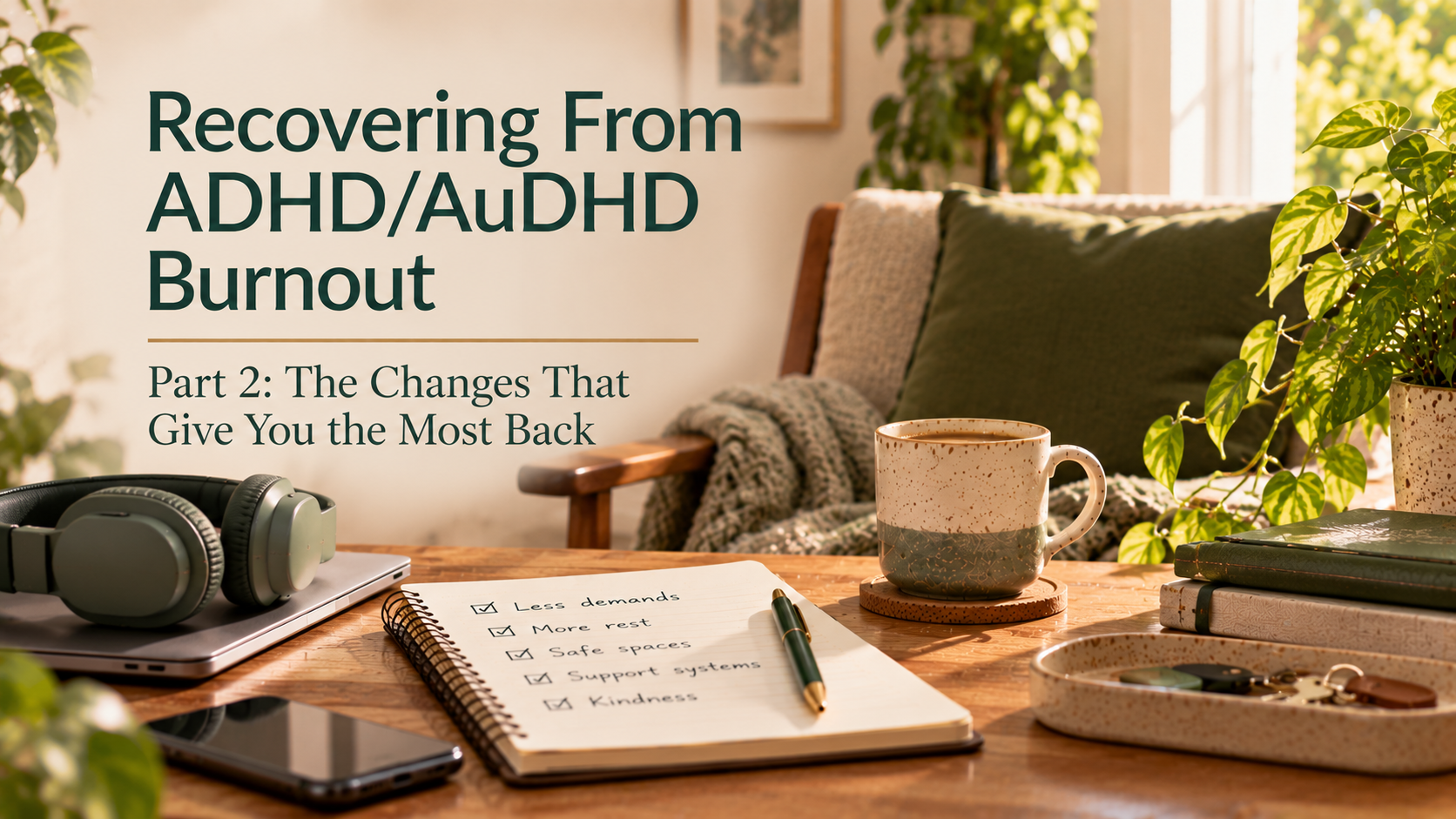
Recovering from ADHD/AuDHD Burnout, Part 2: The Changes That Give You the Most Back
You know you're burnt out, and your instinct is to push through until things settle. That instinct is the trap. Here are the changes that give a neurodivergent brain the most energy back.
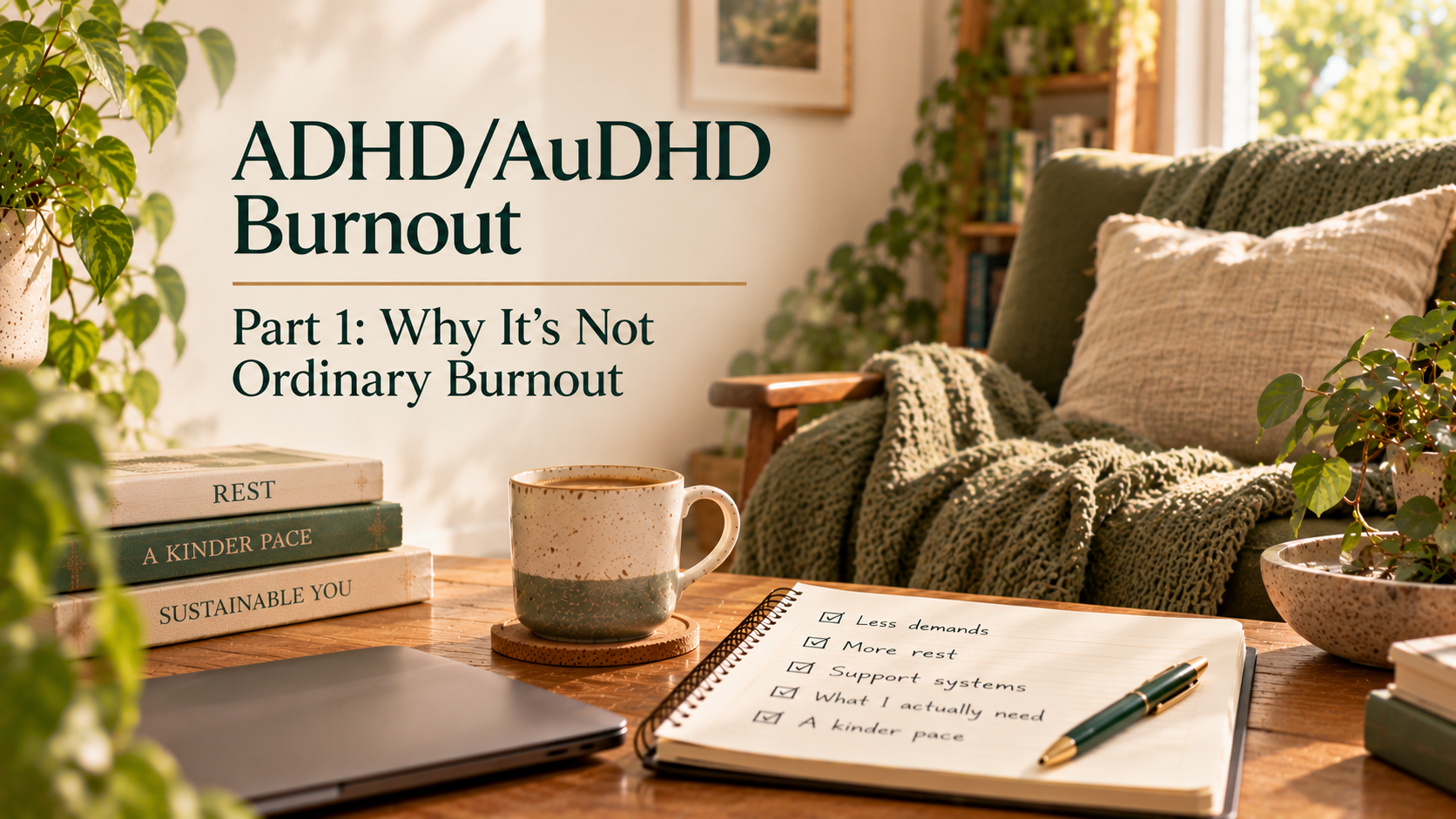
ADHD/AuDHD Burnout, Part 1: Why It's Not Ordinary Burnout
You're not lazy and you haven't lost your edge. If even the basics feel impossible, this might be burnout, and for a neurodivergent brain it runs on different rules. Part 1 of two.
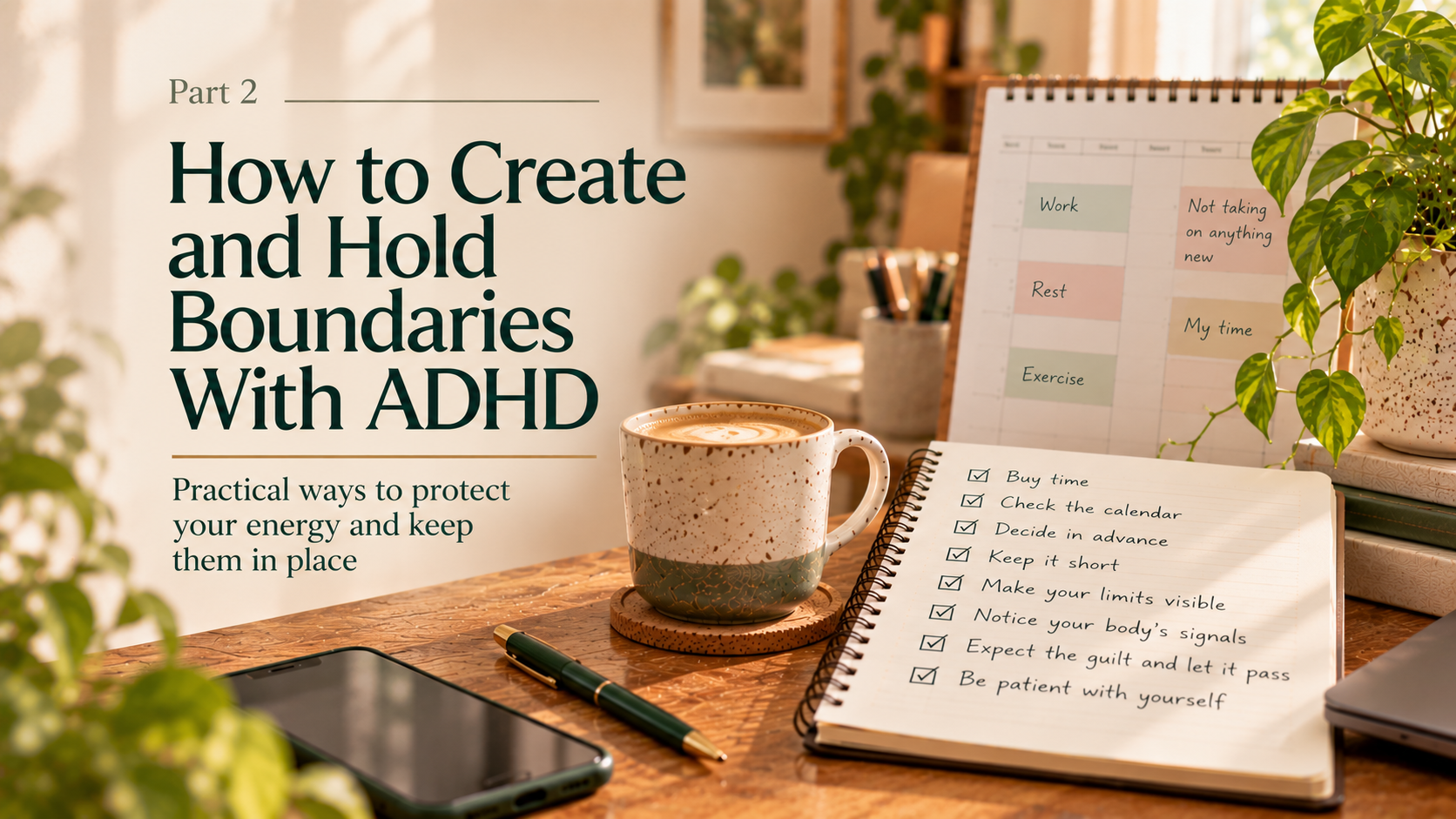
Part 2: How to Create and Hold Boundaries With ADHD
In Part 1 we looked at what a boundary really is. Part 2 is the practical half: how to create and hold boundaries with an ADHD brain by protecting your energy, one small, doable step at a time.
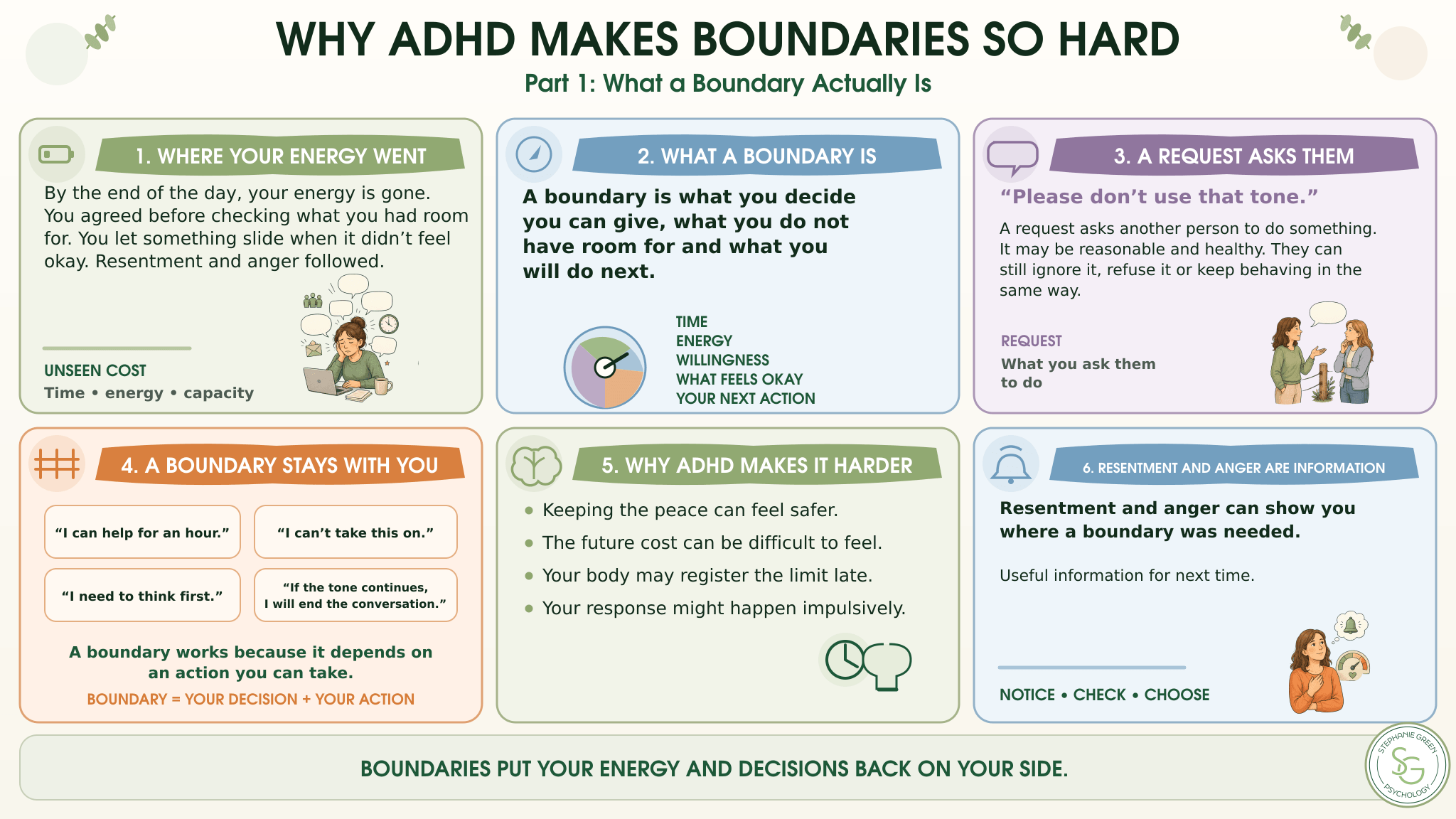
Why ADHD Makes Boundaries So Hard Part 1: What a Boundary Actually Is
By the end of the day you're wrung out and you couldn't tell me where all your energy went. Before we get to how to set boundaries, it helps to be clear on what a boundary actually is, because it's more than saying no and it's not a rule for anyone else. Part 1 of two.
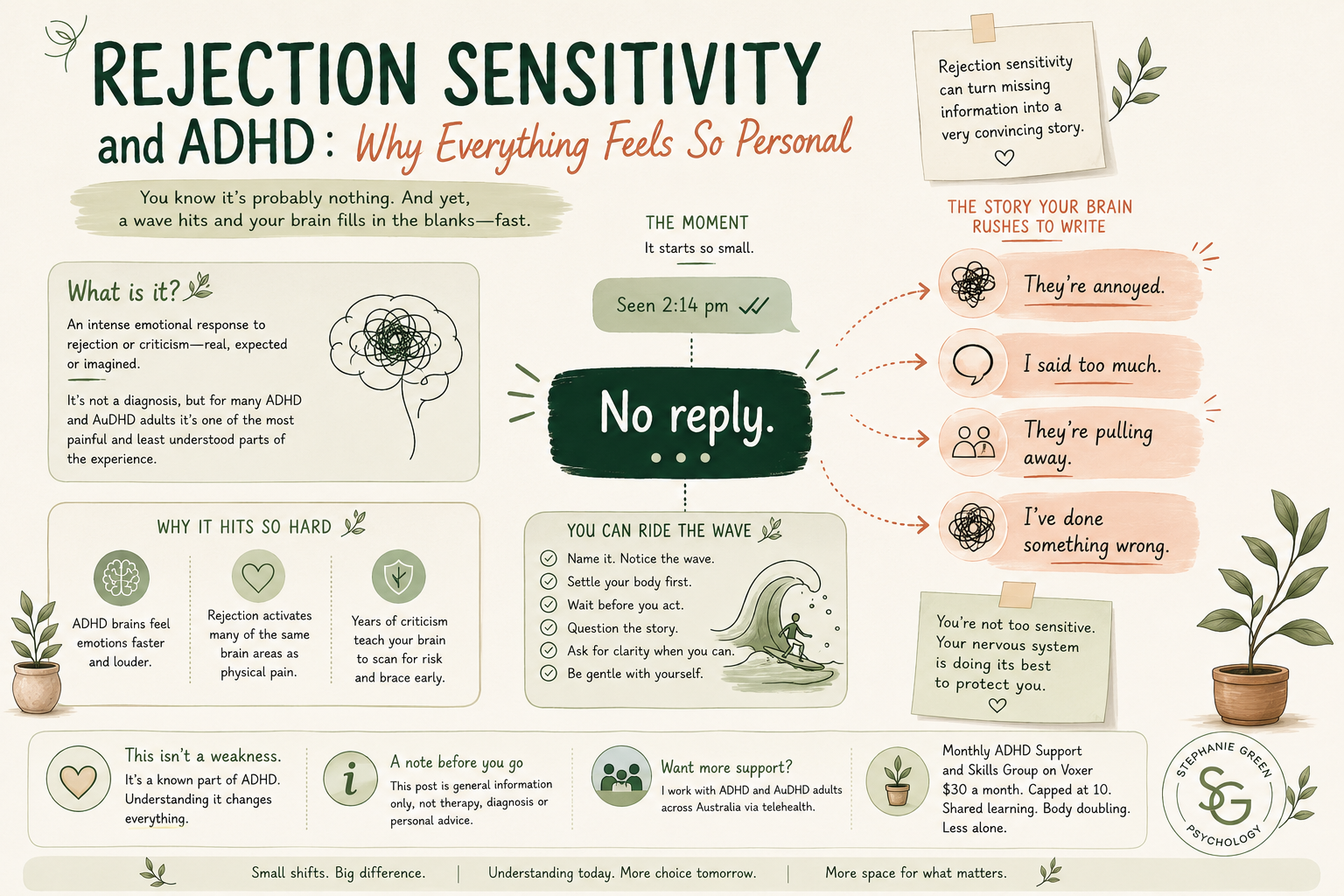
Rejection Sensitivity and ADHD: Why Everything Feels So Personal
Someone leaves you on read and your whole day falls apart. If small moments of rejection land far harder for you than they seem to for everyone else, there is a reason, and it has a name. Here is what rejection sensitivity is, why the ADHD brain feels it so intensely, and some practical ways to work with it.
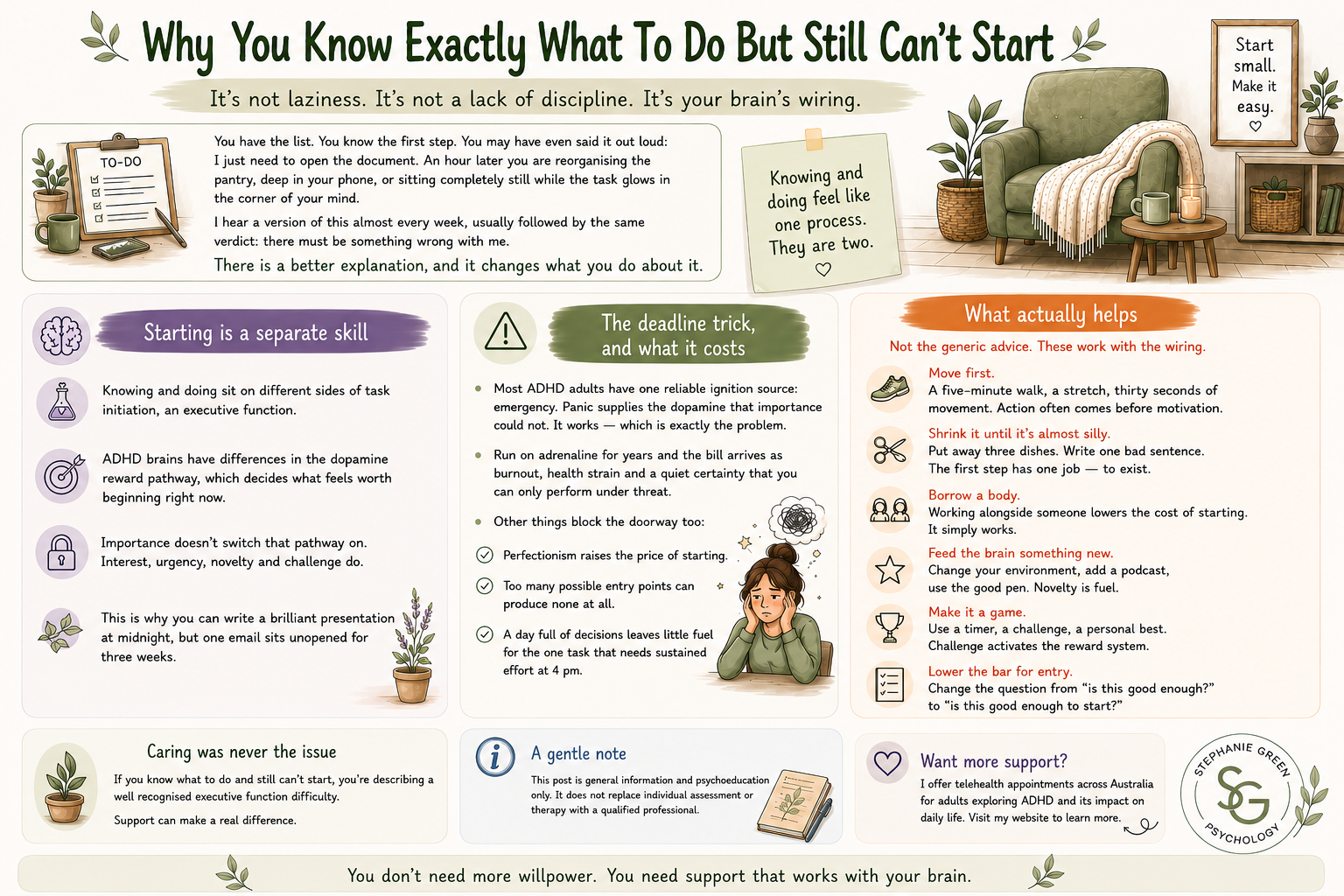
Why You Know Exactly What To Do But Still Can't Start
You have the list. You know the first step. An hour later you still have not started, and there is a real reason why. It has nothing to do with laziness.
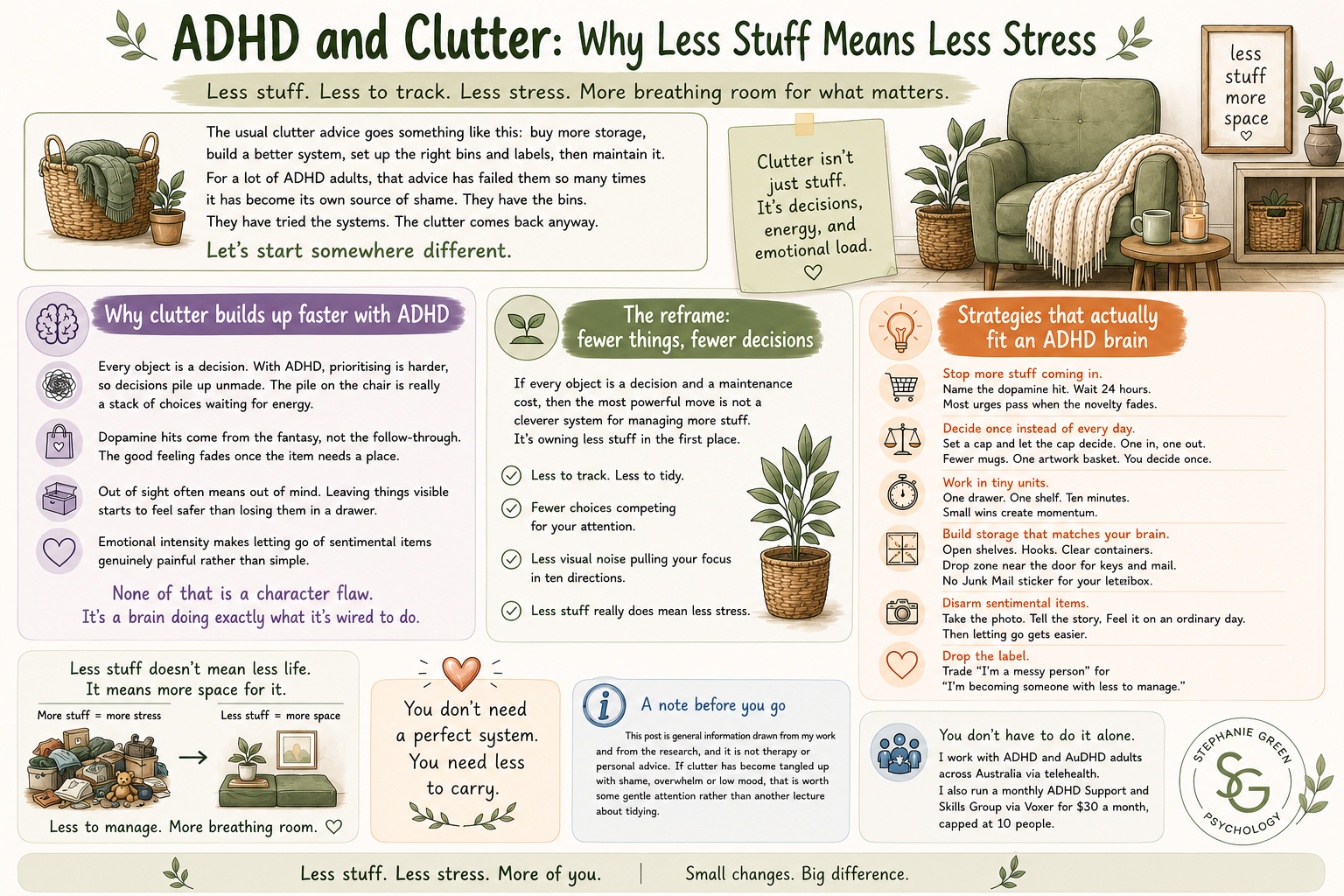
ADHD and Clutter: Why Less Stuff Means Less Stress
You have tried the bins and the systems, and the clutter still comes back. For an ADHD brain, every object is a small unmade decision, so the pile grows faster than you can manage it. Here is why the usual advice keeps failing, and why owning less, not organising more, is the move that actually lowers the stress.
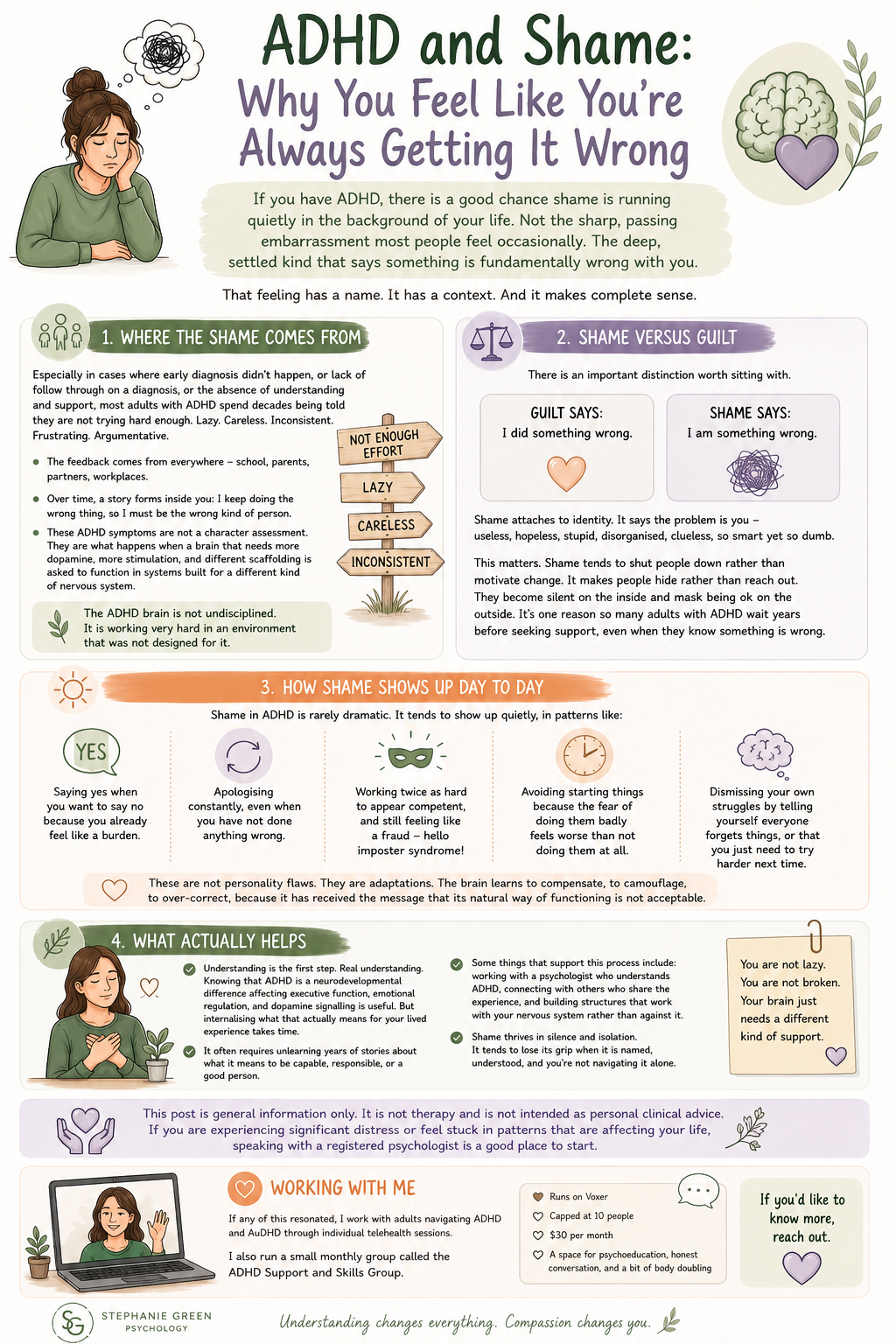
ADHD and Shame: Why You Feel Like You're Always Getting It Wrong
If you have ADHD, shame is often running quietly beneath everything. I explore why ADHD and shame are so deeply connected, and what actually helps.
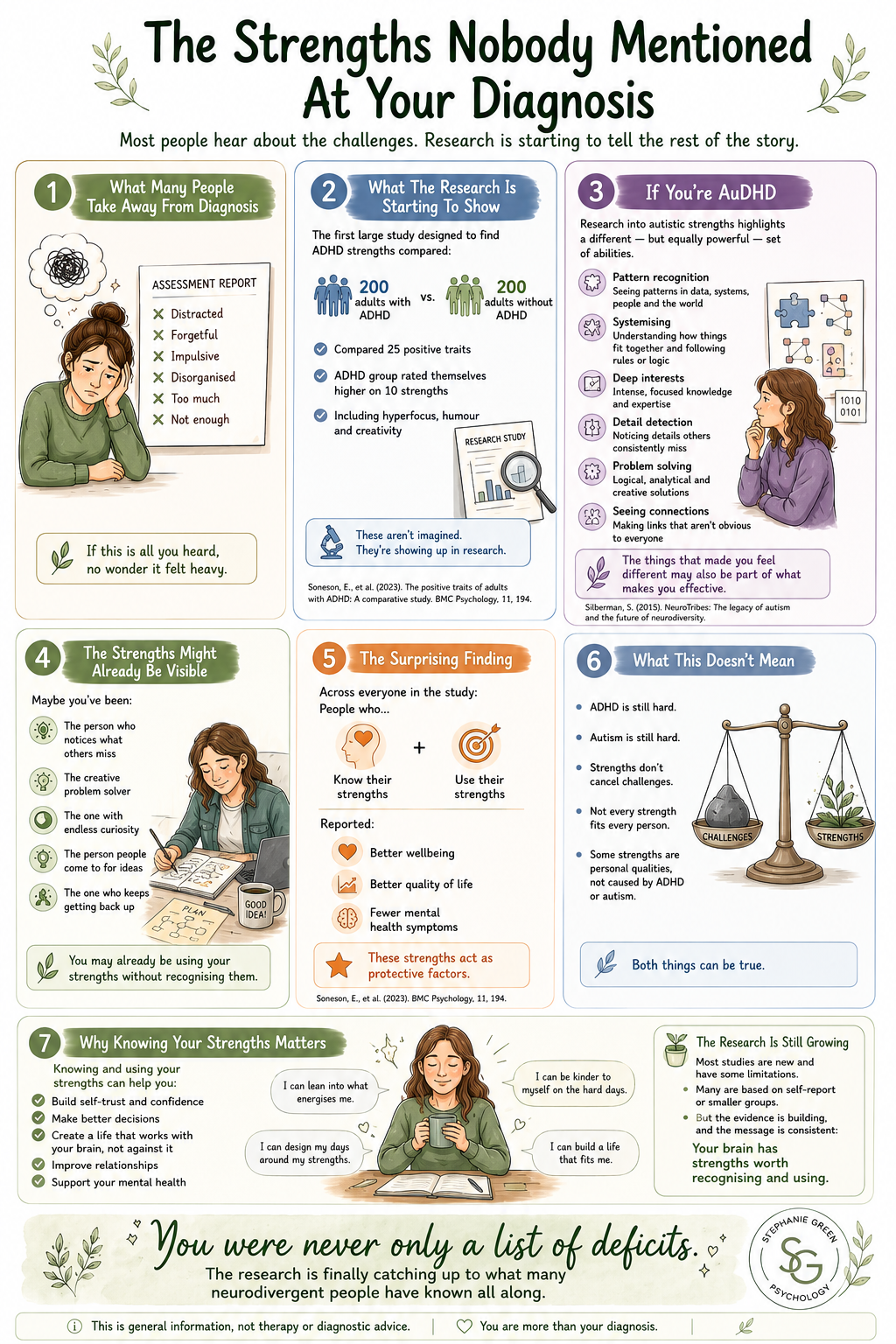
The strengths nobody mentioned at your diagnosis
Most people walk out of an ADHD or autism assessment holding a list of everything that has supposedly gone wrong. Here is the other story, the one with research behind it.
The first big study designed to find the strengths that come with ADHD found adults rating themselves more highly on traits like hyperfocus, humour and creativity. And the people who knew their strengths and used them reported better wellbeing and fewer mental health symptoms.
This week, try noticing one thing your brain did well.
What is one thing your brain did well this week?
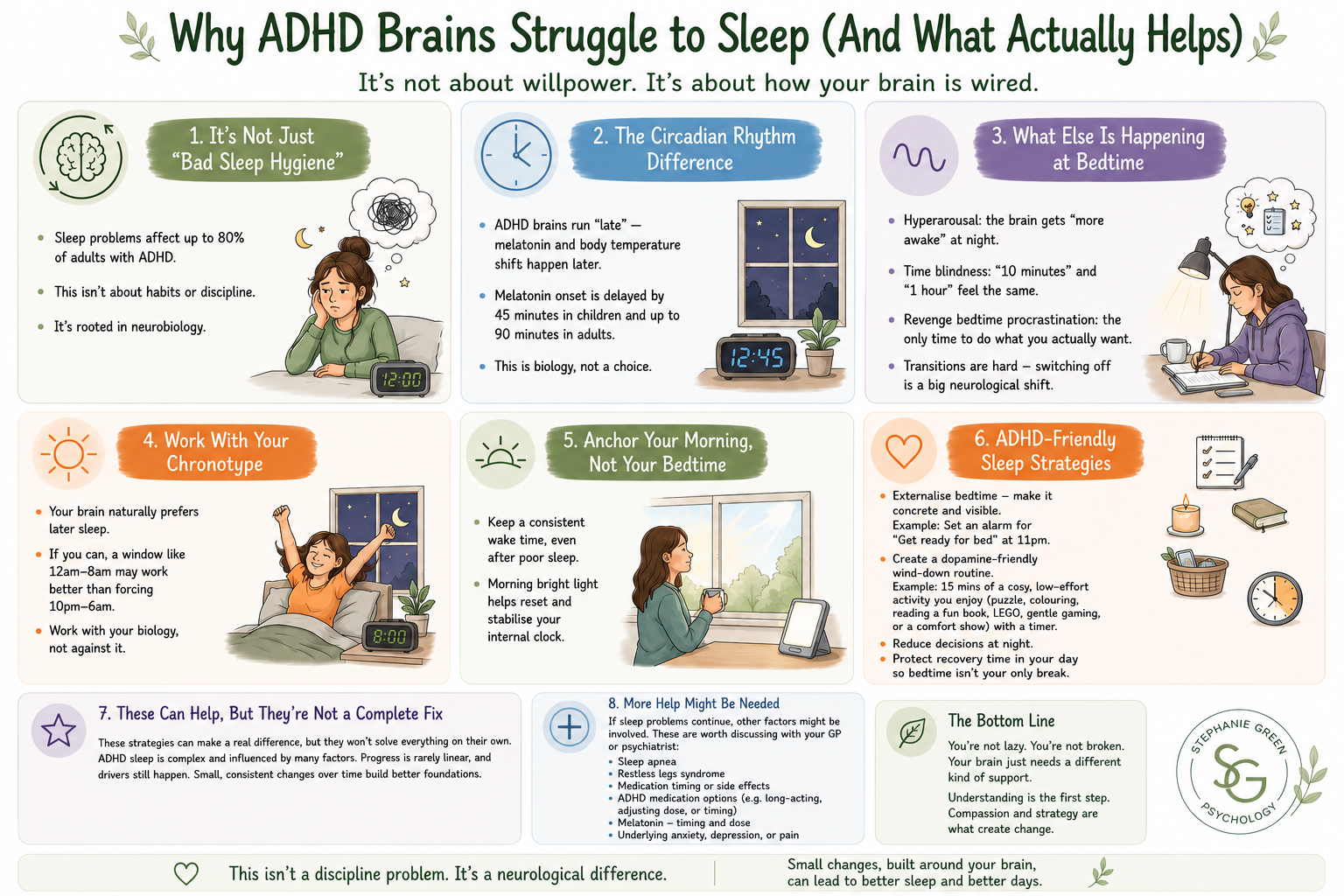
Why ADHD Brains Struggle to Sleep (And What Actually Helps)
It’s midnight. You’re exhausted. And your brain has decided now is the perfect time to think about everything. Sleep difficulties in ADHD aren’t about habits — they’re rooted in neurobiology. Here’s what’s actually happening, and what actually helps.
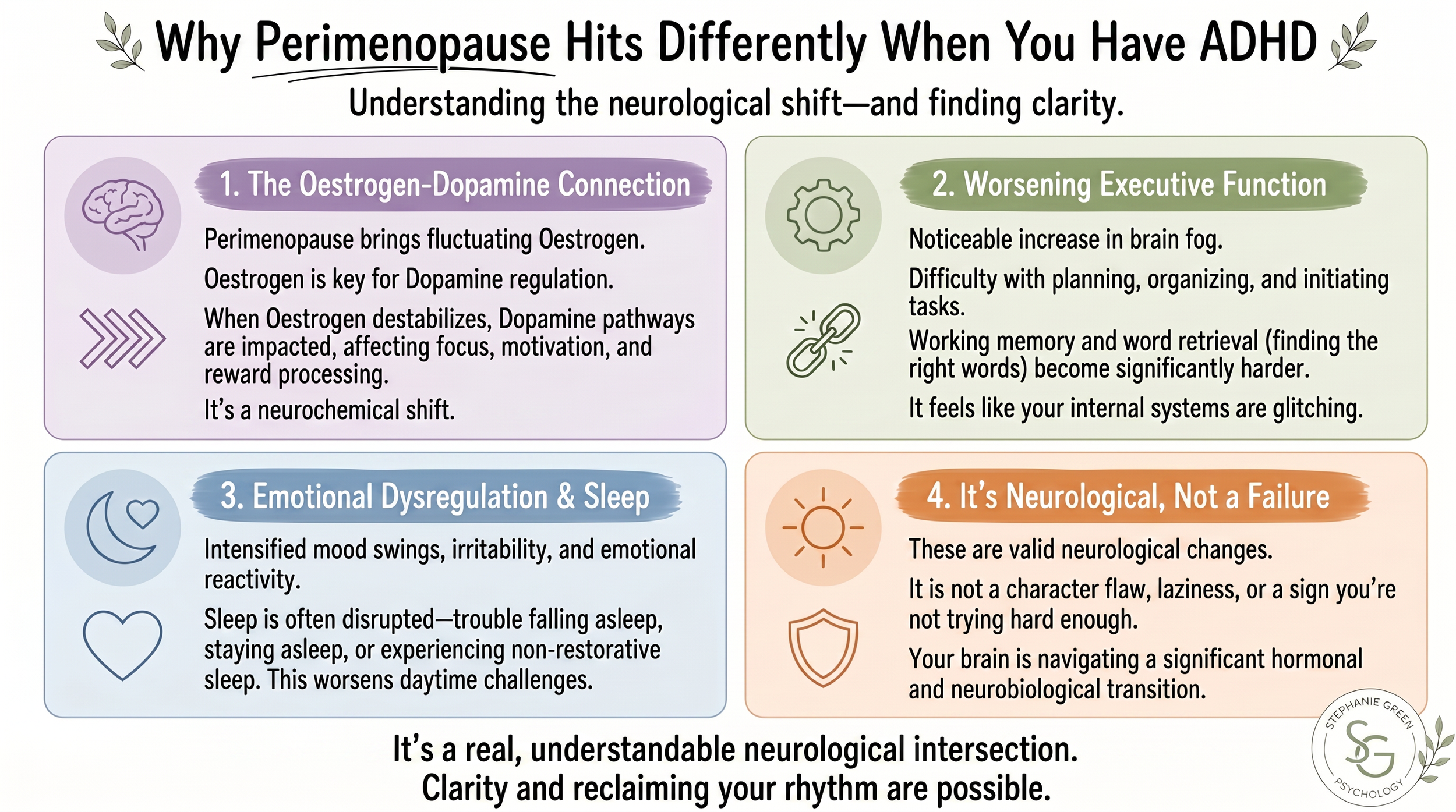
Why Perimenopause Hits Differently When You Have ADHD
If your ADHD feels dramatically harder to manage in your forties, there’s a neurological reason. Oestrogen plays a significant role in dopamine regulation and when it fluctuates in perimenopause, ADHD symptoms can intensify in ways that catch even well-adapted adults off guard.
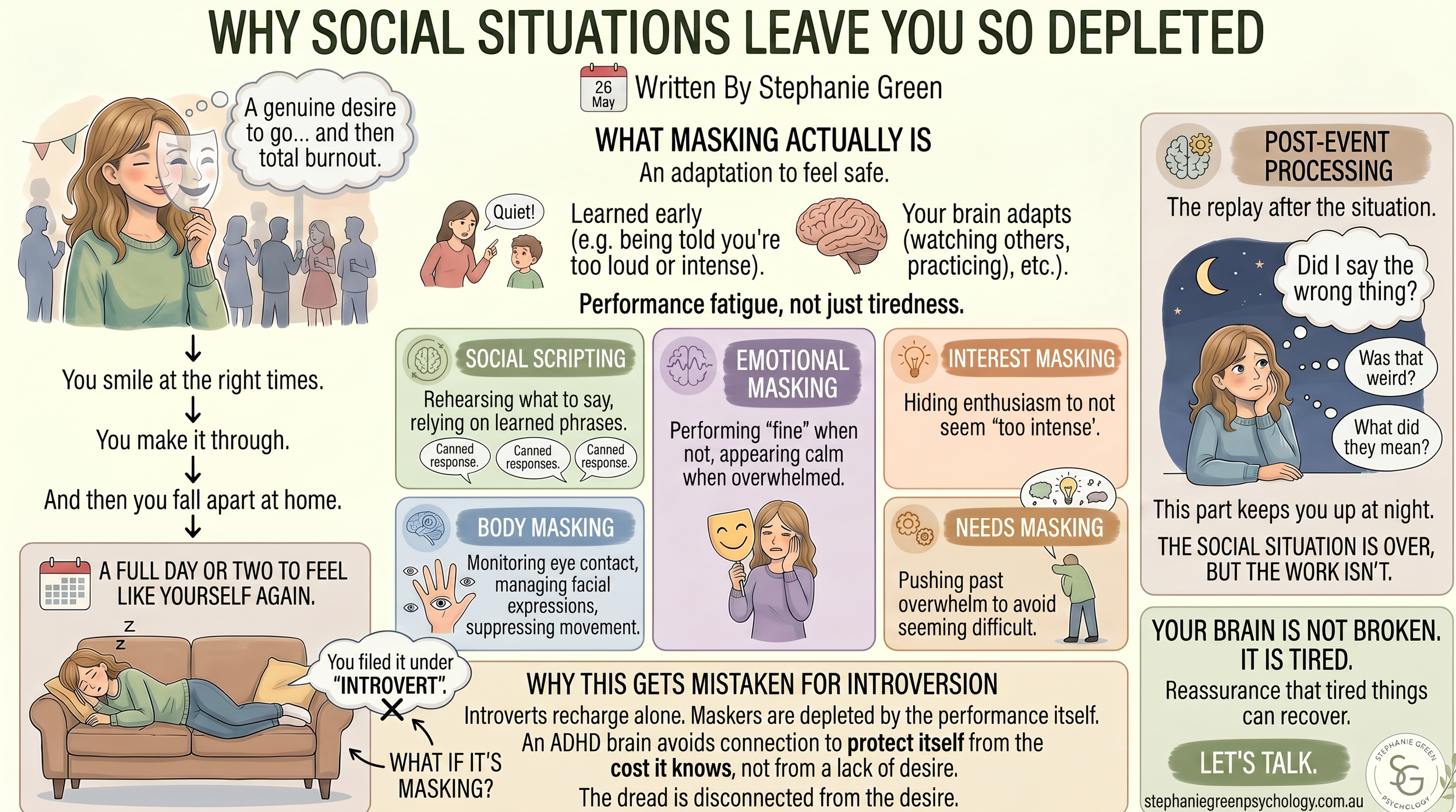
Why Social Situations Leave You So Depleted
You came home from the event or work completely drained. You've always called it introversion. But there might be something else going on - and once you see it, the exhaustion finally makes sense.
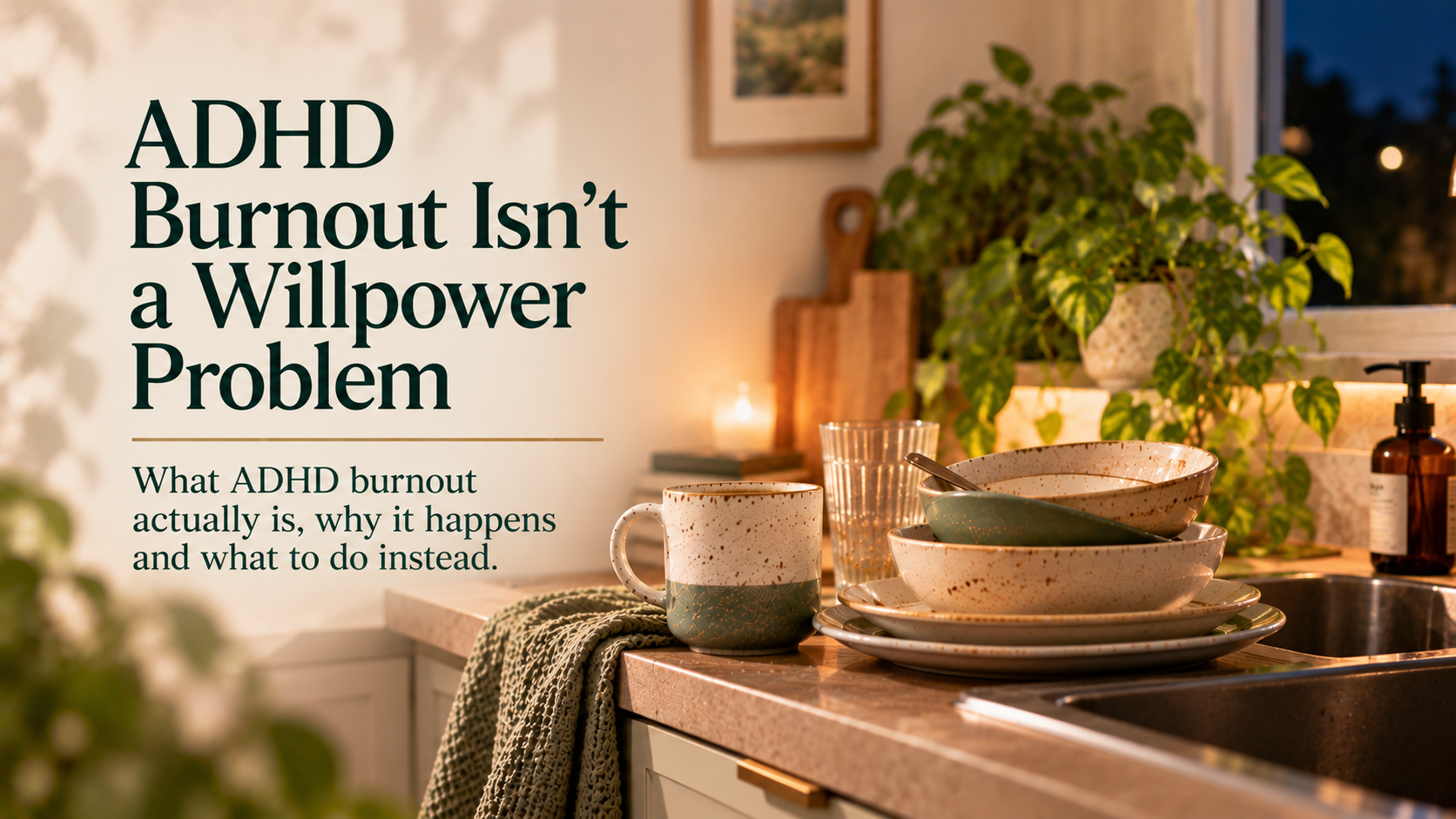
ADHD Burnout Is Not a Willpower Problem
If pushing harder worked, you'd be fine by now. You've been doing it for years. Here's what ADHD burnout actually is, and four reasons "try harder" is the wrong diagnosis.
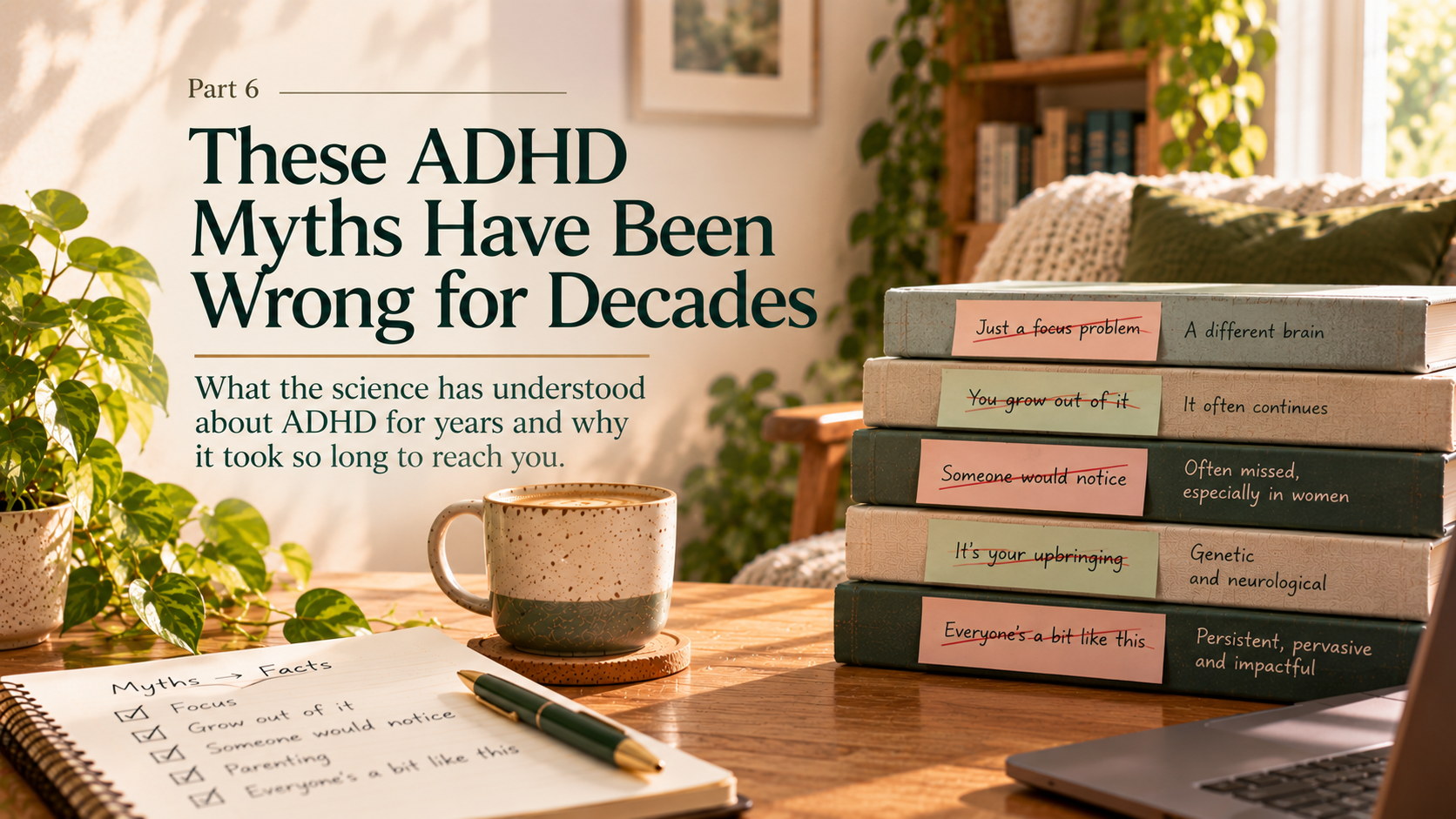
Part 6: These ADHD Myths Have Been Wrong for Decades
If you spent 20, 30 or 40 years being told you were lazy, dramatic or not trying hard enough, the research that could have explained your life already existed. Five myths, and what the evidence actually says.
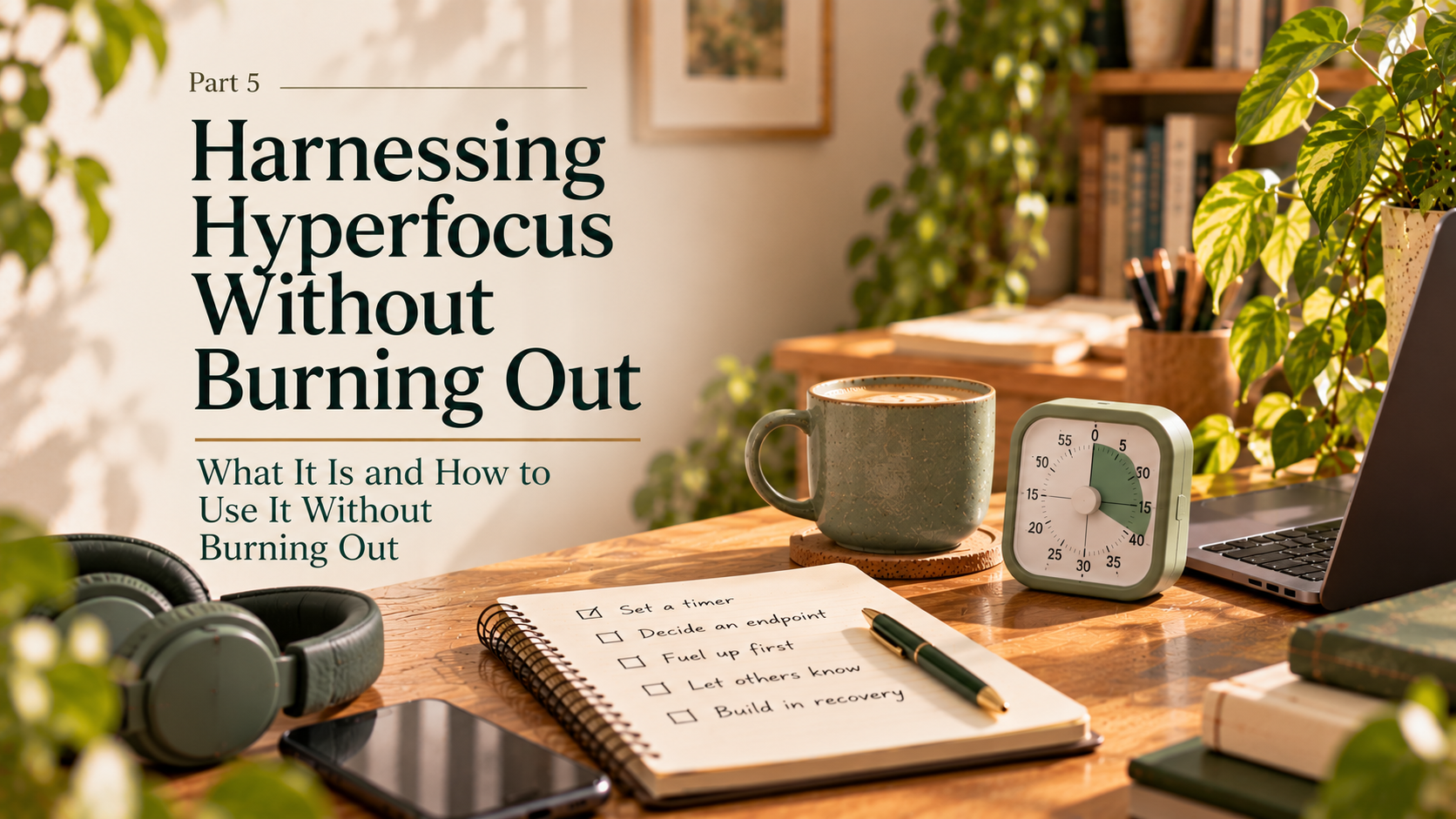
Part 5: Harnessing Hyperfocus Without Burning Out
You sat down to do one thing. Three hours later you haven't eaten, you've missed three messages, and part of you feels more alive than you have all week. This is hyperfocus, and here's how to keep the gift without the crash.
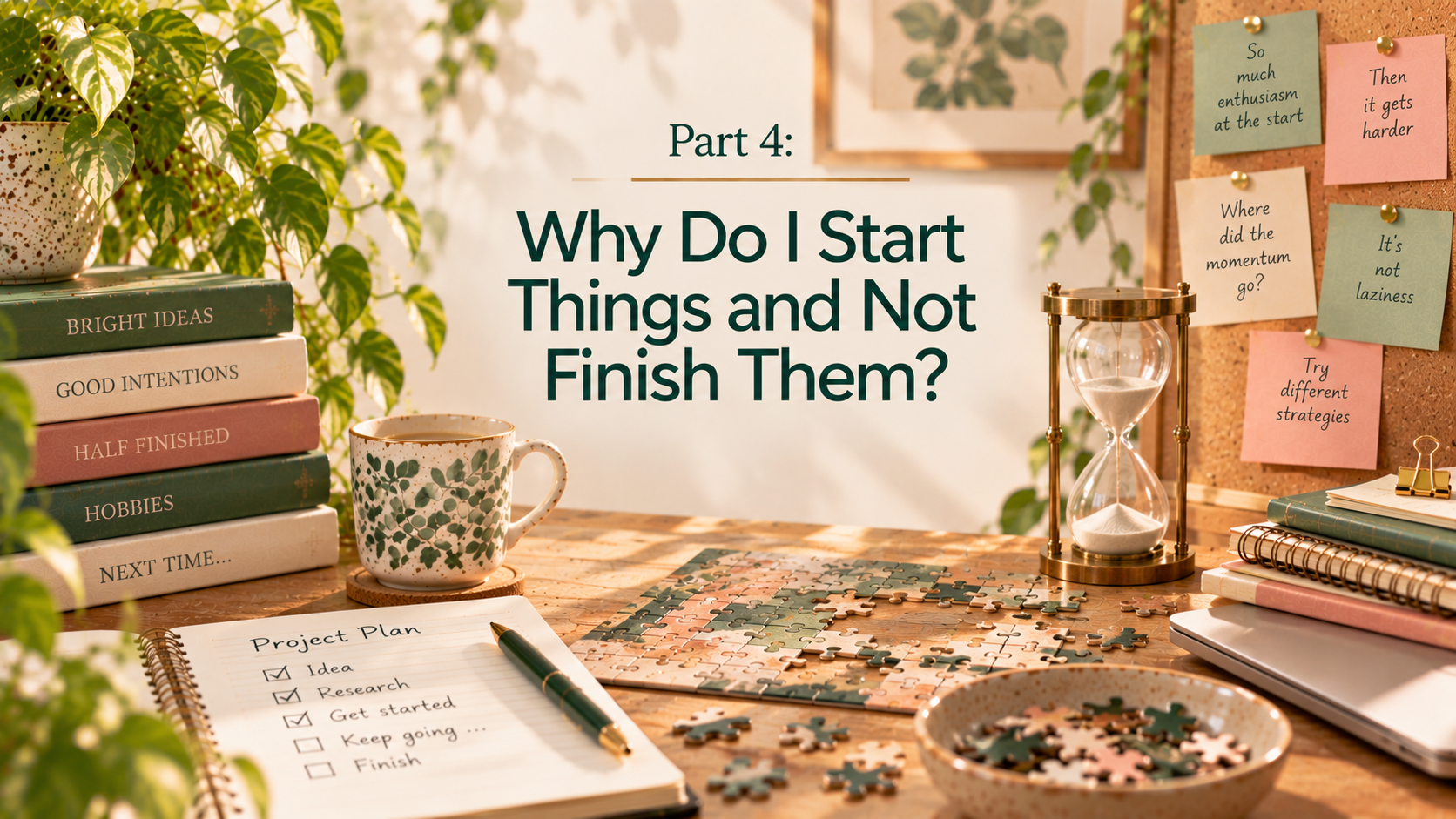
Part 4: Why Do I Start Things and Not Finish Them?
You started so well. Then, somewhere you can't quite point to, the momentum stopped. Here's why ADHD attention drops mid-task, and why the unfinished things aren't a verdict on you.